Residential / GUIDE 05
Interior Design Guangzhou: Bedroom Storage and Calm
Create a calmer Guangzhou bedroom by coordinating wardrobe storage, bedside functions, lighting and the daily dressing routine.
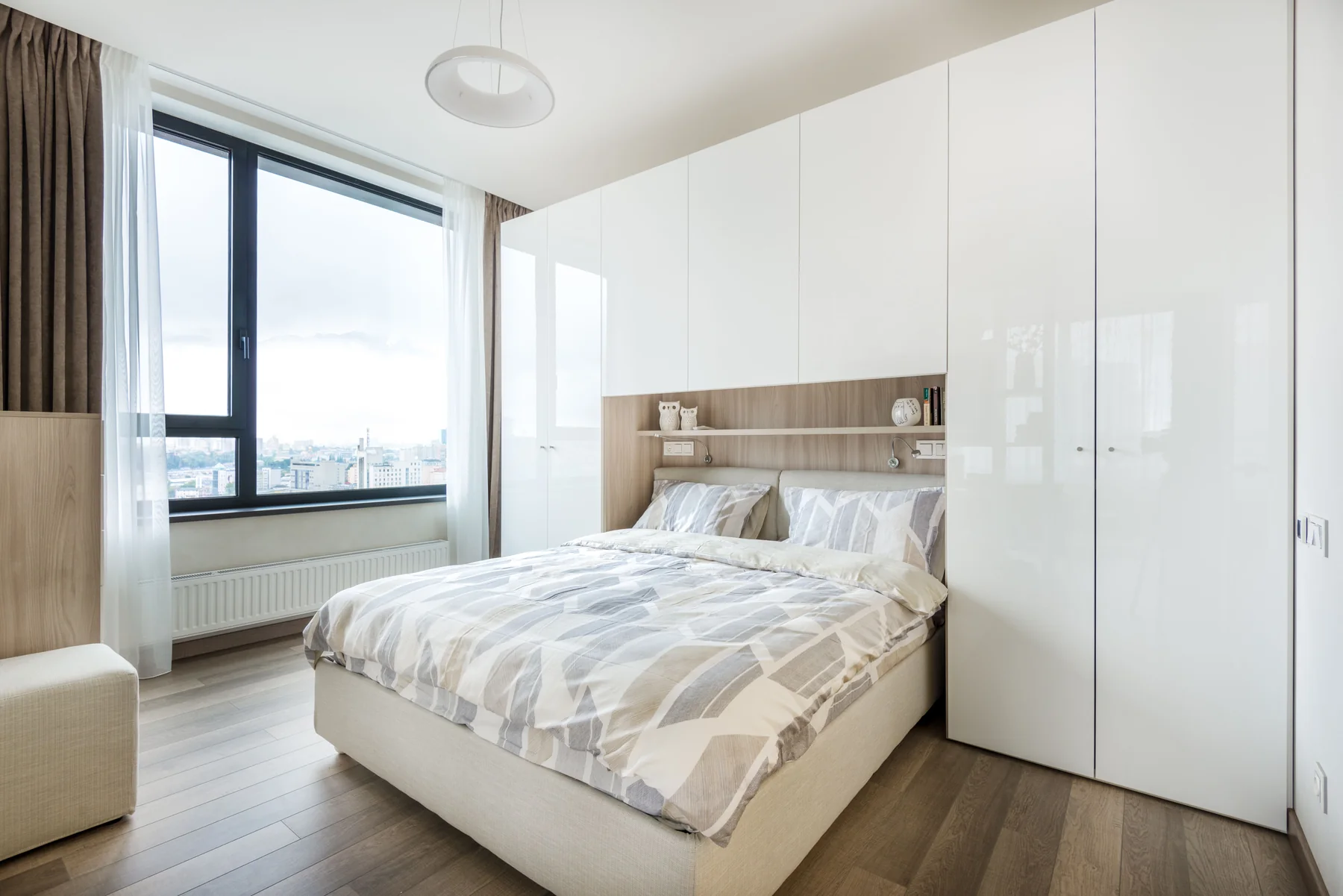
The essential idea
Bedroom storage should make dressing and putting things away straightforward without overwhelming the room. Begin with the contents, protect access around the bed and coordinate wardrobe doors, bedside surfaces and lighting. A calm appearance follows from giving everyday belongings a practical place.
A bedroom can look serene in a photograph while offering nowhere convenient for a charging phone, tomorrow's clothes or an overnight bag. For a Guangzhou apartment or villa, bedroom design benefits from looking closely at these small routines. The aim is to reduce repeated effort and visual clutter, while retaining the comfort and personal character that make the room feel like a private retreat.
Audit what the wardrobe must hold
Separate hanging clothes, folded items, shoes, bags and occasional possessions. Measure unusually long garments or bulky objects rather than assuming a standard internal arrangement will accommodate them. If two people share the room, discuss whether their storage habits are similar.
Make space for items that are in transition: clothes waiting to be put away, a handbag used daily or a suitcase being packed. A design that only works when every possession is perfectly stored may not suit a busy household. Build convenience into the arrangement.
Give the bed a working perimeter
Place the actual bed footprint on the plan, including the frame and headboard. Check access to windows, curtains, wardrobes and the bathroom. Bedside furniture should support the sleeper without making it awkward to move through the room.
Where space is constrained, compare a smaller bedside surface with a different wardrobe arrangement. Do not solve one issue by creating another at the doorway. Rehearse opening drawers and making the bed, especially where furniture sits close to a wall or other built-in element.
Choose wardrobe doors by their behaviour
Hinged, sliding and open arrangements have different implications. A hinged door needs space to swing. A sliding system changes which part of the wardrobe can be accessed at once. Open storage makes its contents part of the room's appearance and needs regular organisation.
Discuss hardware, handles, internal lighting and cleaning access before approving the elevations. Full-height doors may create a quiet visual effect, but their practicality depends on the chosen construction and fittings. Ask the joinery supplier to confirm how the proposed system will operate and be maintained.
Resolve the bedside details together
Bedside surfaces, reading lights, switches and charging points should be coordinated as one small design problem. Check their positions from the bed rather than only from a standing viewpoint. Each person may want independent control without disturbing the other.
Consider what happens when a book, glasses and a drink are placed down together. A narrow decorative shelf may be insufficient even if it looks elegant. Where a wall-mounted element is proposed, confirm its relationship to the final mattress and headboard before fixing it in place.
Make light and privacy adjustable
A bedroom may need bright light for dressing and a quieter setting later in the evening. Plan those uses separately instead of relying on a single decorative fitting. Coordinate curtains or blinds with furniture so they can be operated and cleaned without difficulty.
Review the room after dark as well as during the day. Reflections in mirrors and glazing may change the sense of privacy. The appropriate window treatment depends on orientation, surrounding buildings and the household's preferences; one solution will not suit every bedroom in the home.
Check the room as a daily sequence
Walk through waking, dressing, returning home and going to bed. Note where objects land and where users pause. This final review often identifies useful changes before expensive joinery is committed.
- Verify the wardrobe inventory against its internal layout.
- Show doors and drawers in their open positions.
- Confirm a place for luggage and spare bedding.
- Coordinate bedside controls with the actual furniture.
- Keep required equipment and maintenance access reachable.
A well-resolved bedroom package should include both the room plan and the wardrobe interiors. Together they provide a more dependable guide than a beautiful front elevation alone.
Common questions
Are built-in wardrobes always better than freestanding furniture?
No. Built-in storage can use an awkward space efficiently, while freestanding pieces offer flexibility and may be easier to move or replace. Compare capacity, access, appearance and future needs before deciding.
How can a bedroom stay calm without hiding everything?
Use closed storage for visually busy items and reserve a few deliberate places for personal objects. When display areas have a clear boundary, books, artwork and keepsakes can add character without taking over every surface.