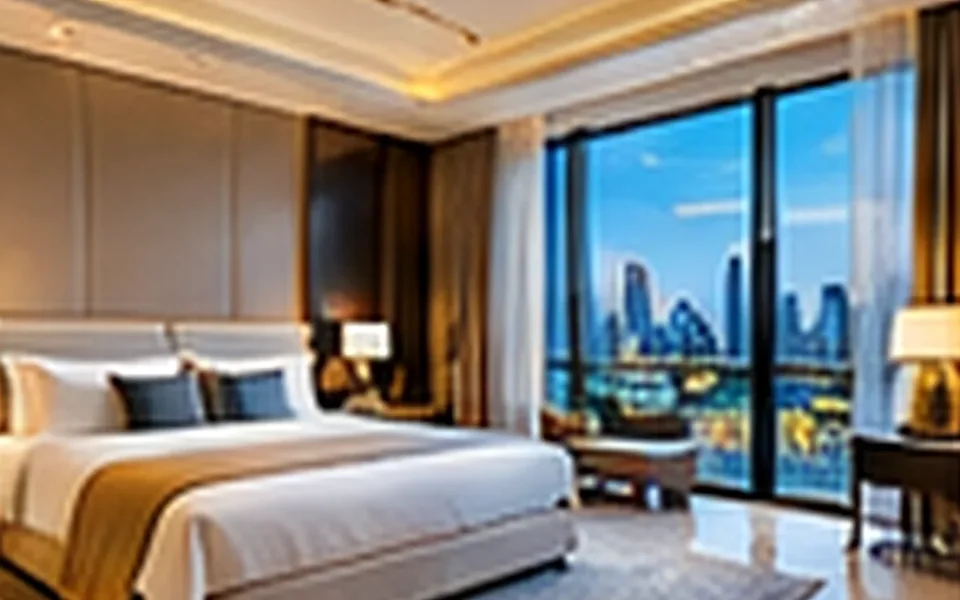
The guestroom is where hotel design promises become most tangible. A hotel interior design company in Guangzhou should consider everything from the first suitcase placed on a rack to nighttime lighting and daily housekeeping. Beautiful materials are only useful if they support comfort and can be maintained across many stays.
Plan guestrooms around sleep, luggage, lighting, work, cleaning and component replacement for repeat use.
Start with the guest’s sequence of actions
Picture arrival with bags, hanging clothing, taking a shower, charging devices and finding the bedside light in darkness. Test reach distances, switches and furniture clearance at actual scale. A room may appear spacious in a photograph while offering no good place to open a suitcase.
Design restful lighting and acoustics
Provide controllable general, task and nighttime lighting without requiring a complicated control sequence. Coordinate noise from corridors, equipment and adjoining rooms with qualified specialists as needed. Consider blackout, glare and privacy. Guests should not have to learn the room’s technology before being able to sleep.
Review bathroom and cleaning details
Specify suitable slip resistance, water management, accessible maintenance points and durable fittings. Check how housekeeping will clean behind and under furniture, replace amenities and access equipment. Minor detailing choices become significant when repeated across dozens of rooms and serviced every day.
Choose FF&E that can be repaired
Record furniture specifications, fabric performance, hardware models and spare-part strategies. Prefer solutions that enable replacement of a damaged component instead of an entire built-in. Test a room mock-up with operators and housekeeping staff before placing volume orders.
Example: a practical project decision
A guestroom prototype includes a low decorative table beside the bed. Testing reveals that it obstructs the luggage route and is difficult to clean under, so the hotel selects a wall-mounted alternative.
Putting this into practice
At the next review, ask the project team to test luggage, storage and device charging. The following discussion should address how to check light controls from the bedside. Document the assumptions, responsible people and any unresolved questions before approving drawings or supplier orders. Before the next commitment, inspect housekeeping and wet-area access and approve furniture through a room mock-up. Where building management instructions, technical submissions or specialist work are involved, seek the advice of properly qualified parties. A useful decision record explains not only what was chosen but why, with any effect on budget, maintenance, user comfort or construction programme clearly stated. One useful guestroom review is a short operational rehearsal: enter carrying a case, find sockets, close the curtains, locate reading light, open the wardrobe and follow the route into the bathroom. Have housekeeping repeat the exercise with cleaning equipment. Note every awkward reach and obstruction. Revisions at this stage may affect only one room; discovered after procurement, the same mistake could be multiplied across the entire property.
A short decision checklist
- Test luggage, storage and device charging
- Check light controls from the bedside
- Inspect housekeeping and wet-area access
- Approve furniture through a room mock-up
Frequently asked questions
Does a luxury room need complex controls?
No. Intuitive, reliable controls often deliver a better experience than elaborate systems that confuse guests.
Why involve housekeeping in design reviews?
Housekeeping staff can identify cleaning, replacement and service issues that visual drawings may miss.