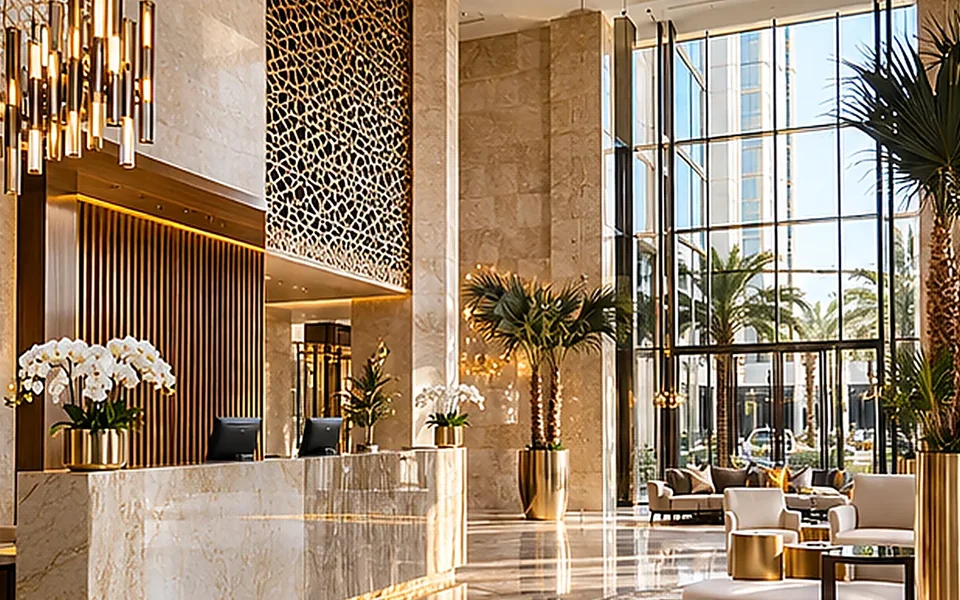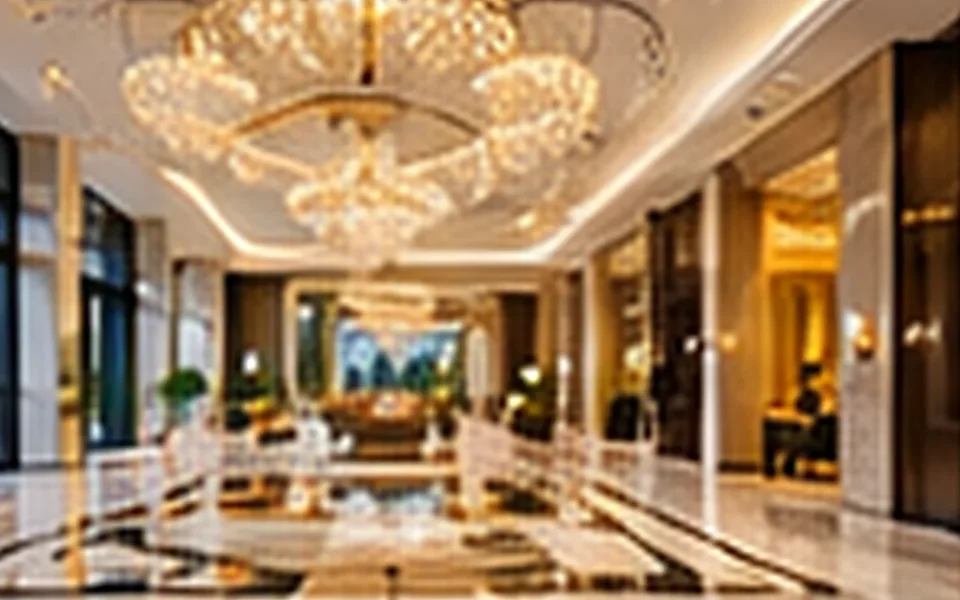
Boutique hotels compete on memory and atmosphere, but a memorable entrance is not simply a dramatic wall. A hotel interior design company in Guangzhou should shape the guest’s first few minutes: finding the door, understanding where to go, feeling welcome and moving to the room without confusion. A clear arrival sequence supports both character and operational calm.
Shape a distinctive hotel welcome through signage, circulation, culturally sensitive materials, seating and practical service points.
Begin at the street or shared building lobby
Consider how guests arrive with luggage, after dark or in heavy rain. The design should make entry easy to recognise while respecting the host building’s conditions. Transitional shelter, exterior signage and accessible routes may require coordination with relevant parties; an interior that begins only at reception overlooks important guest experience.
Give the lobby multiple comfortable functions
A small lobby may host registration, waiting, informal meetings and short rest. Test how these functions overlap during peak arrivals. Seating should not obstruct luggage routes. Locating charging points, water and storage intelligently often improves hospitality more than adding elaborate decoration.
Express Guangzhou through selective details
Lingnan-inspired screens, ceramics, layered lighting or courtyard ideas can suggest place without imitating historic buildings. Any cultural reference should feel coherent with the hotel brand and function. Choose durable, maintainable materials and avoid unsupported claims that a decorative motif is inherently local or traditional.
Review the handoff to the guestroom
Corridors, lifts, signage and door hardware are part of the arrival story. Verify that guests can find their room easily, control lighting and air-conditioning, and understand key fittings. Test an unfamiliar person’s journey before sign-off; the designer knows the plan too well to reveal every confusion.
Example: a practical project decision
A small Guangzhou boutique hotel places a large sculpture in the lobby concept. A luggage-flow test shows it blocks the main route, so the feature is moved to a quieter waiting area where it can be appreciated safely.
Putting this into practice
At the next review, ask the project team to walk the approach with luggage. The following discussion should address how to test lobby use at peak arrival. Document the assumptions, responsible people and any unresolved questions before approving drawings or supplier orders. Before the next commitment, choose a restrained local design narrative and review wayfinding through to the room. Where building management instructions, technical submissions or specialist work are involved, seek the advice of properly qualified parties. A useful decision record explains not only what was chosen but why, with any effect on budget, maintenance, user comfort or construction programme clearly stated. A boutique hotel's story should remain legible across multiple touchpoints rather than being concentrated in one photogenic lobby wall. Look at signage, corridor finishes, lift arrival, door hardware and the first view into the guestroom. Ask someone unfamiliar with the property to navigate the proposed route. If that person gets lost or finds the controls confusing, refine the experience before adding more decorative detail. Hospitality starts with clarity.
A short decision checklist
- Walk the approach with luggage
- Test lobby use at peak arrival
- Choose a restrained local design narrative
- Review wayfinding through to the room
Frequently asked questions
Can a small hotel have a strong identity?
Yes. A coherent arrival, thoughtful material palette and clear guest journey can be more memorable than expensive decoration.
Should the lobby be designed separately from guestrooms?
No. Guests experience these spaces as one connected journey, so consistent wayfinding and atmosphere matter.