Choosing an interior design company in Guangzhou is a business decision as much as a creative one. A convincing portfolio is a useful start, but the more important questions concern who will lead the project, how drawings become approved work, and what happens when a site condition changes. Begin with the outcome you need instead of choosing solely by style.
An evidence-based shortlist for Guangzhou owners: relevant work, written scope, technical capability and transparent decision-making.
Start with an outcome-led brief
Describe the users, operating hours, budget priorities, existing constraints and the project’s intended life. A restaurant needs different approval milestones from an apartment or corporate office. Ask prospective studios to explain which parts of your brief are confirmed and which require a survey; a responsible answer will distinguish facts from assumptions.
Compare projects that match your complexity
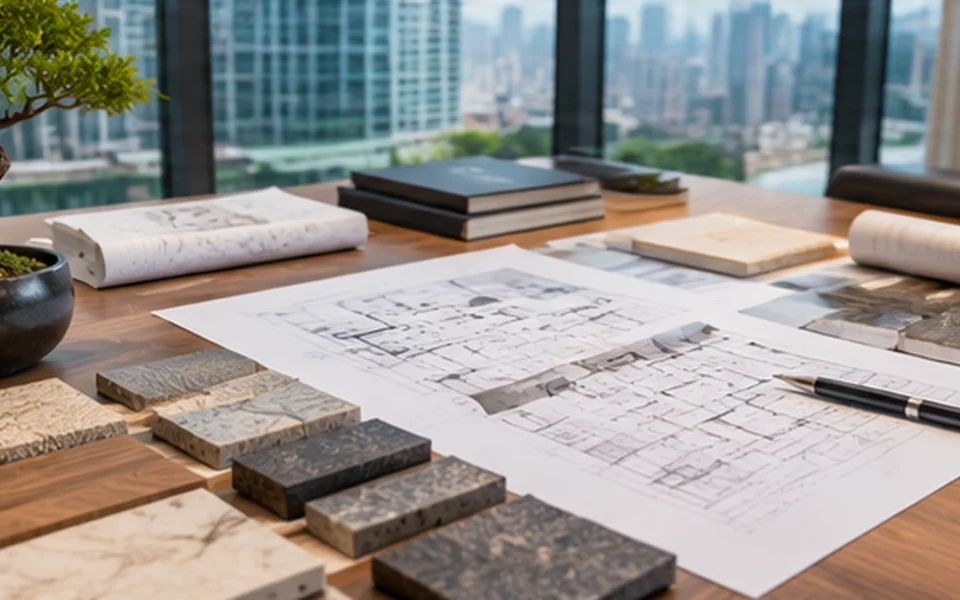
A team may show beautiful private homes but have limited experience coordinating a functioning hotel. Review relevant drawings, material samples, built work and client references where available. Ask who produced the design and who managed delivery. A realistic demonstration of problem-solving is more persuasive than an edited montage of finished spaces.
Clarify who does what
Check who prepares the concept, measured plans, technical documentation, supplier packages and site observation reports. Understand the relationship between the designer, engineer, contractor, landlord and local approval parties. A named point of contact and written approval process reduce ambiguity when multiple people are involved.
Compare value, not just the headline fee
Separate design fees from contractor costs, furniture, lighting, permits, freight and contingency. A lower proposal may exclude detailed joinery or procurement coordination. Request the same scope breakdown from each candidate before making comparisons and ask how additional work or client changes will be recorded.
Example: a practical project decision
An owner receives three elegant proposals for a Tianhe commercial space. One is substantially cheaper but excludes technical coordination and supplier review; a comparison matrix reveals that it may not be the lowest total-cost option.
Putting this into practice
At the next review, ask the project team to request comparable written scopes. The following discussion should address how to ask for relevant built-project references. Document the assumptions, responsible people and any unresolved questions before approving drawings or supplier orders. Before the next commitment, confirm technical and supplier responsibilities and record exclusions and change procedures. Where building management instructions, technical submissions or specialist work are involved, seek the advice of properly qualified parties. A useful decision record explains not only what was chosen but why, with any effect on budget, maintenance, user comfort or construction programme clearly stated. Before awarding the commission, ask each shortlisted firm to describe one difficult project decision and how it was resolved. A useful answer names the owner of the issue, the evidence considered and the recorded approval. Also ask who can make substitutions once construction begins and what cost information must be supplied before permission is given. This reveals the studio’s process far more clearly than a general promise of quality or creativity.
A short decision checklist
- Request comparable written scopes
- Ask for relevant built-project references
- Confirm technical and supplier responsibilities
- Record exclusions and change procedures
Frequently asked questions
What matters most when choosing a Guangzhou design company?
Relevant project experience, a clear scope, reliable communication and an accountable delivery team usually matter more than a visual style alone.
Should design and construction be priced together?
They can be, but design deliverables and construction responsibilities should still be separated clearly for comparison.